
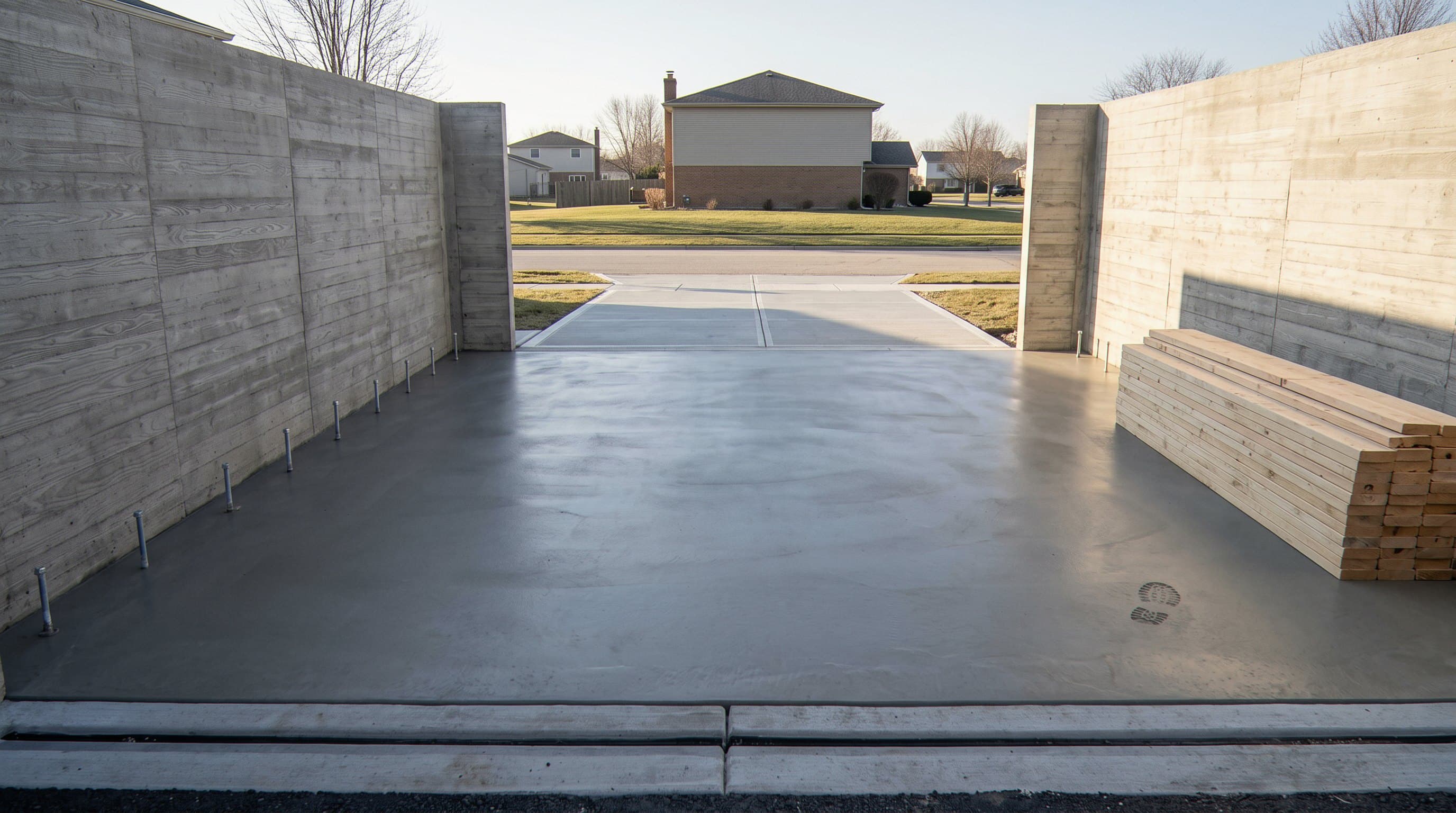
Foundation and slab work built for Aurora ground
Aurora sits on heavy clay soil that swells when it soaks up water and shrinks again when it dries out. Our winters run cold, and frost pushes deep into that ground every year. When footings sit too shallow, the frozen soil lifts them, then drops them back down when spring thaws the yard. That slow push and pull is what cracks a slab and racks a wall over time. So we dig the footings below the frost depth, set them on soil that holds, and pour foundation walls that carry the load straight down. Before a single form goes up, our crew reads the lot, checks how water drains, and plans the grade so runoff moves away from the house instead of pooling against it. The Fox River runs right through town, and plenty of Aurora lots hold more water in the soil than the owner ever expects. We grade with that in mind and keep the base dry before we pour. A foundation is only as good as the dirt under it. We treat that dirt as the first real part of the job.
We handle new house foundations, garage slabs, shed pads, room additions, basement floors, and shop floors. Every pour starts the same way. We strip the loose topsoil, bring the base to grade, and compact a clean layer of stone so the concrete rests on something firm. We set forms that hold a true line and lay rebar or wire mesh where the load asks for it. Then we place the mix, screed it flat, and finish the surface by hand and by machine. Curing gets the same care. Concrete gains its strength slowly, and rushing that stage is how you end up with a weak, dusty top. We let each slab cure on its own clock so it hardens dense and even, ready for a car, a wall, or a floor that will last for years. On slabs that sit inside a heated space, we lay a vapor barrier under the stone so ground moisture cannot wick up into the finished floor. We also cut control joints at the right spacing, which gives the concrete a planned place to crack as it shrinks, instead of a rough line wandering across the middle of the pour.
- Footings dug below the local frost depth, so the cold season cannot heave and crack your foundation.
- A compacted stone base under every slab, which spreads the load and keeps the concrete from settling into soft spots.
- Rebar and wire mesh placed to match the weight the slab will carry, from a garage floor to a full house footing.
- Grading and drainage planned first, so water moves away from the foundation instead of sitting against it.
- A hand finished surface and a full cure, so the top wears hard and does not flake or dust under daily traffic.
Timing depends on the size of the pour and on the weather. A shed pad or a garage slab often goes in over a few days once the base is ready. A full house foundation takes longer, since the footings, the walls, and the backfill each need their own step. We walk you through the plan up front so you know what happens on which day and where your project stands. If the forecast turns cold or wet, we tell you straight and adjust the schedule, rather than pouring into bad conditions and hoping it holds. Owners across Aurora, Naperville, North Aurora, and Montgomery call us for exactly that kind of plain talk.
If you need a new foundation, a slab, or a pad poured right here in Aurora, call us and tell us what you are building. We will look at the site, talk through the base and the grade, and hand you a clear plan to get it done.